Test Prep Insight is reader-supported. When you buy through links on our site, we may earn an affiliate commission. Learn more
Lingoda Review
We took Lingoda’s live language classes for three months and found out if it’s worth your money.
When most people want to learn a new language, they think of apps like Babbel, Rosetta Stone, or Duolingo. But what if you want something more serious with classroom-style instruction and credentials employers recognize? That’s where Lingoda comes in. After hearing about their live classes, I decided to test it myself. I’ve spent the last three months taking their small group classes, and this isn’t your typical language program. In this comprehensive Lingoda review, I’ll break down their live classes, pricing, Sprint program, and how they compare to competitors like Preply and Italki. If you’re serious about language learning and need real results fast, this review is for you.
After testing Lingoda classes extensively, here’s what I found:
Best for professionals and serious learners who need structured, certified language training. If you’re relocating for work, preparing for language exams, or need credentials employers recognize, Lingoda delivers what other apps can’t.
Live classes with certified teachers in small groups. You get real interaction with qualified instructors and 3 to 4 other students. No more talking to your phone – you’re practicing with actual people.
Sprint Challenge creates real accountability. Sprint is a 2-month language learning challenge where you commit to taking a certain number of classes per month. I found the most motivated learners in Sprint. When money’s on the line, people show up and participate.
Higher cost but genuine results. Yes, the Lingoda cost is higher than typical apps, but you’re paying for live professional instruction and certificates that actually matter.
As this is a pretty lengthy review that covers a number of topics, you’ll find a helpful jump-to table of contents above for your convenience.
Video Review: Is Lingoda Worth It?
In the video above, Lara from the Test Prep Insight team gives our full Lingoda review. She explains how Lingoda’s live online classes work with native teachers, the pros and cons, pricing and packages, and whether the Lingoda app is worth it compared to other language learning options. For more detail, be sure to continue reading our full written review below.
What Is Lingoda?
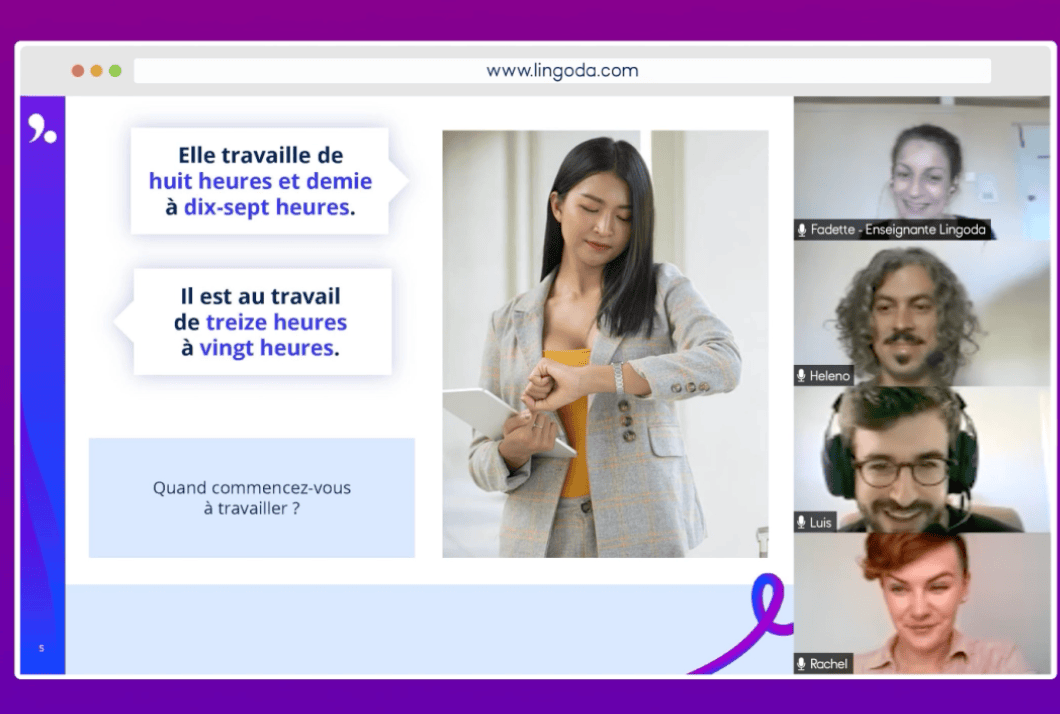
Lingoda calls itself an ‘online language school,’ and that’s pretty accurate. With over 2,400 teachers offering 800,000+ live classes annually, they focus on three key elements – vocabulary, grammar, and communication. This isn’t another gamified app promising fluency in 10 minutes a day. It’s structured language education delivered through live, small-group classes via Zoom. (As a quick side note, they’re constantly improving the Lingoda Classroom video interface, such as making video and audio improvements and adding a waiting room where you can test your mic and speakers, so the tech overall is pretty good.)
They offer six languages: English, Business English, German, French, Spanish, and Italian. German and English courses go up to advanced level C1, while French, Spanish, and Business English go to intermediate B1/B2. Italian only goes to elementary A2. Note that Lingoda Spanish is predominantly centered on Spanish from Spain, not from Latin America.
I chose German for my Sprint Challenge, but Lingoda French and Spanish were the other common choices. It seems like Lingoda French is popular with people planning to move to Quebec or France. I found the sign up process was straightforward; you take a placement test, then browse their 24/7 class schedule. Classes run around the clock thanks to teachers based worldwide.
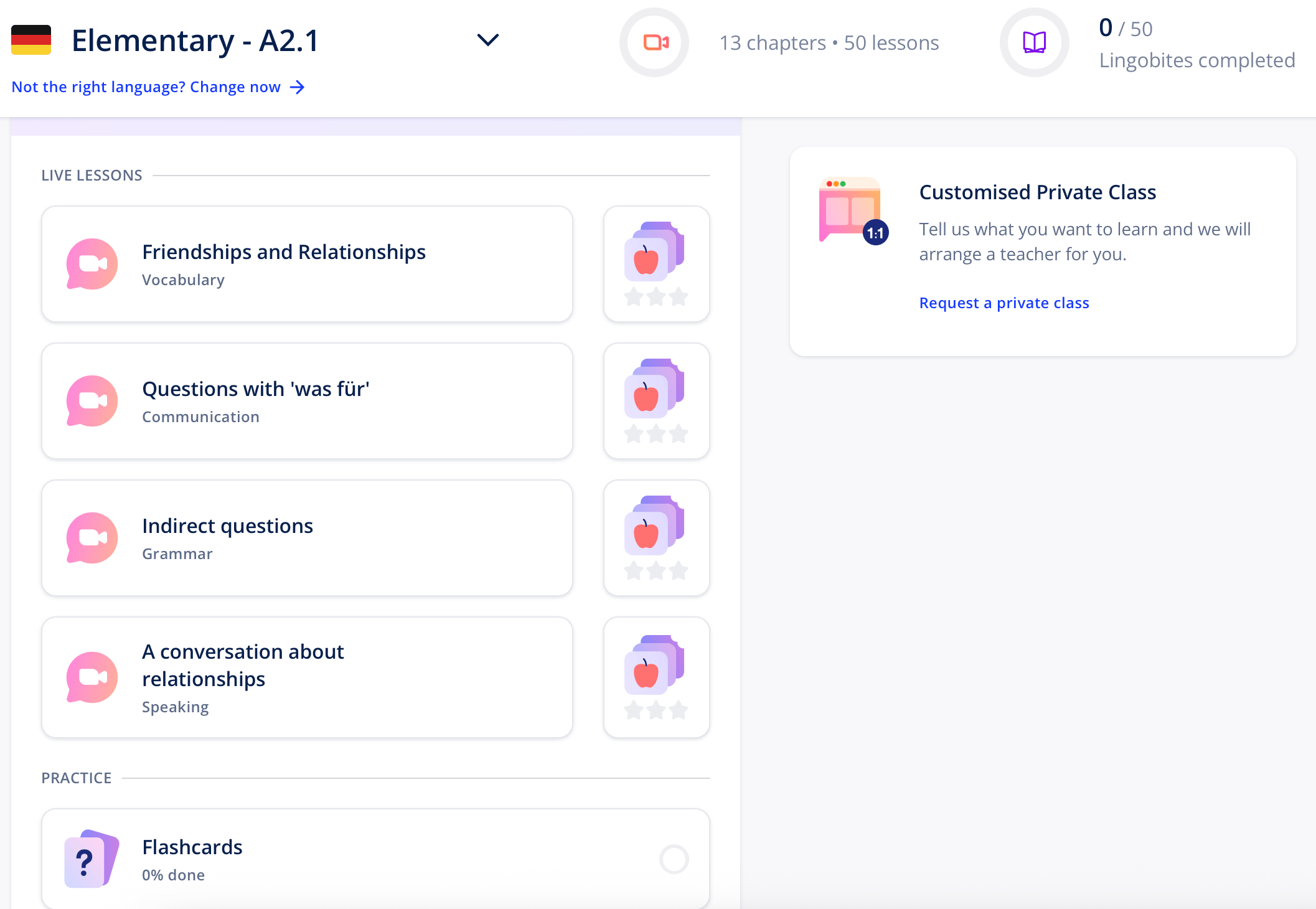
Each learning level (e.g., A1, A2, B1, etc) has 50 classes each. A Lingoda class is 60 minutes long and has 3-5 students maximum (you can also opt for a private 1 on 1). The small size means you can’t hide – you’re actively speaking, answering questions, and getting personalized feedback.
The curriculum follows the CEFR framework, earning you recognized certificates at each level. To receive your certificate, you need to attend 90% of the classes in that level (e.g., 45 out of 50).
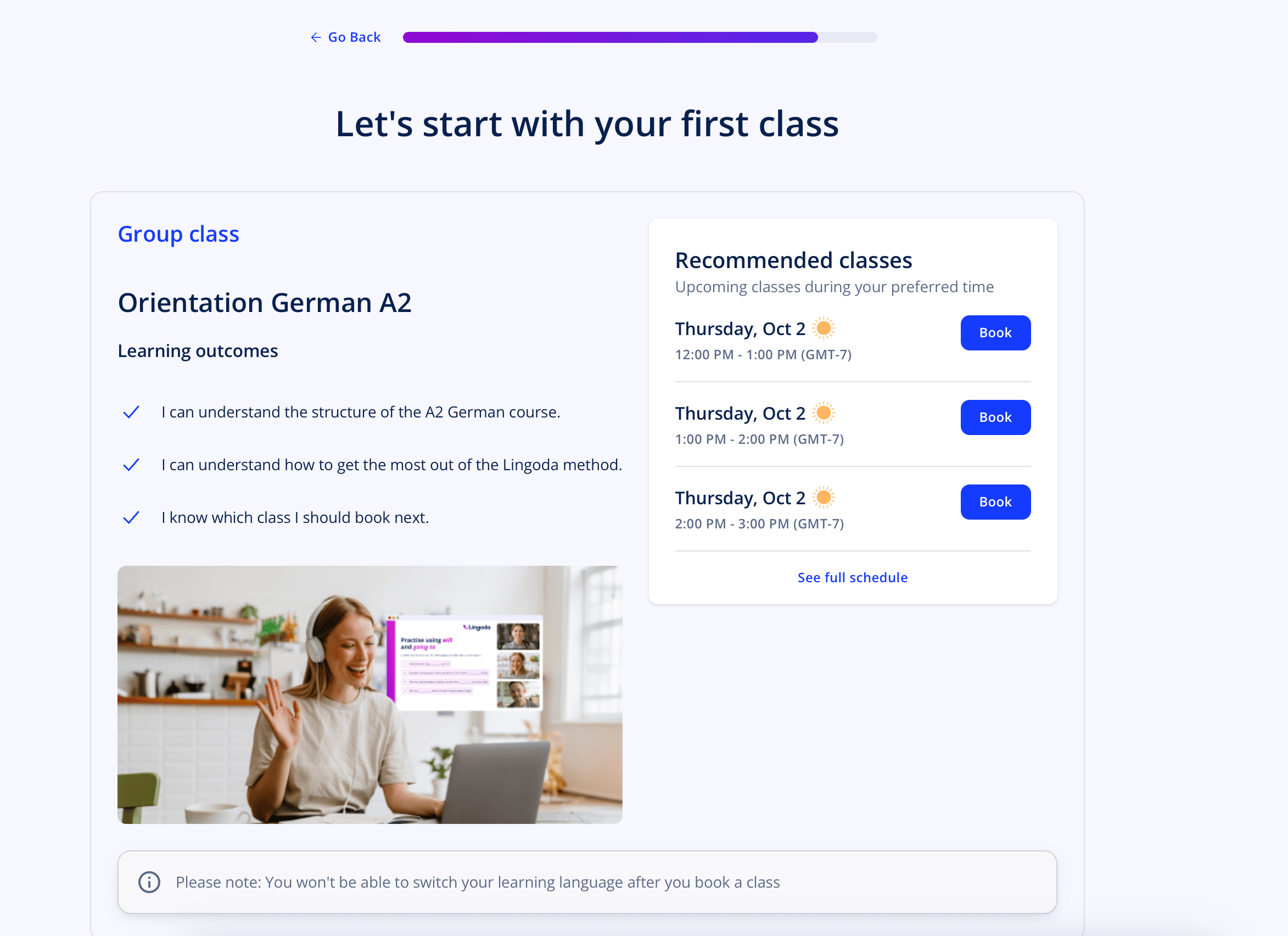
Setting up your first class with Lingoda
The Lingoda Sprint Challenge
Here’s what makes Lingoda unique: the Lingoda Sprint program. You commit to taking 30 or 60 classes over two months. If you attend every single class and meet all requirements, Lingoda refunds 50% of your tuition. You can even get more value by choosing to receive class credits instead of cash.
Key Sprint rules include: only take classes during the designated two-month window, attend all classes, don’t miss more than 10 minutes, and only book group classes. Breaking any rule disqualifies you from the refund. However, if Lingoda cancels a class on their end, you won’t be disqualified – just wait for the credit to be returned at the end. Be sure to read the rules carefully.
I did the 60-class Lingoda German Super Sprint. That meant one class every single day for two months, including weekends. It sounds intense because it is. But the results? I went from struggling with basic conversations to confidently discussing higher level topics in German.
The accountability factor is real. When you know missing even one class costs you potentially hundreds of dollars, you show up. I saw the same faces in my German classes every day – we became a tight group pushing each other forward.
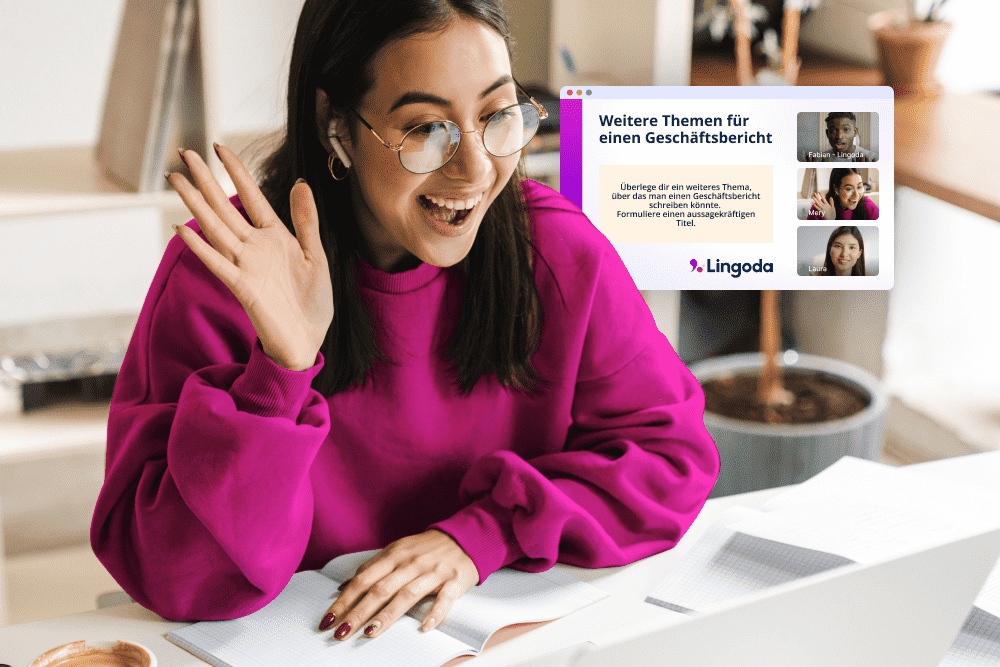
Lingoda Sprint Challenge Live Class
Pros and Cons of Lingoda
Let me give you the straight truth about what works and what doesn’t.
Pros: Professional Instruction, Small Groups, Flexible Scheduling
Certified Teachers Make a Huge Difference
Every Lingoda instructor I had possessed legitimate teaching credentials – TEFL, TESOL, or equivalent qualifications. These aren’t random freelancers; they’re trained language professionals.
One of my German teachers, Klaus, had been teaching for 15 years and spoke four languages fluently. He caught pronunciation errors I didn’t even know I was making and explained grammar concepts that actually stuck. Klaus was German, but I occasionally had Austrian and Swiss instructors. The accent variety didn’t bother me, though some students prefer consistency.
Small Class Sizes Create Real Interaction
Most of my classes had no more than 4 students, which hit the sweet spot for group dynamics. I practiced speaking German every single class – no hiding behind multiple choice questions.
24/7 Scheduling Actually Works
Classes run around the clock, which worked well for my unpredictable work schedule. The booking system lets you schedule weeks in advance or grab last-minute slots. My tip: book classes 1-2 weeks in advance to ensure availability.
Sprint Program Creates Unmatched Motivation
The Lingoda Sprint Challenge is smart psychology. Knowing I’d lose hundreds of dollars if I missed even one class kept me committed through busy periods, travel, and general life chaos. The daily routine built legitimate study habits.
No Real Testing Required
Certificates are attendance-based rather than exam-based. You earn CEFR credentials by completing classes, not passing tests. This removes testing anxiety but also means there isn’t necessarily an objective measure of your actual proficiency.
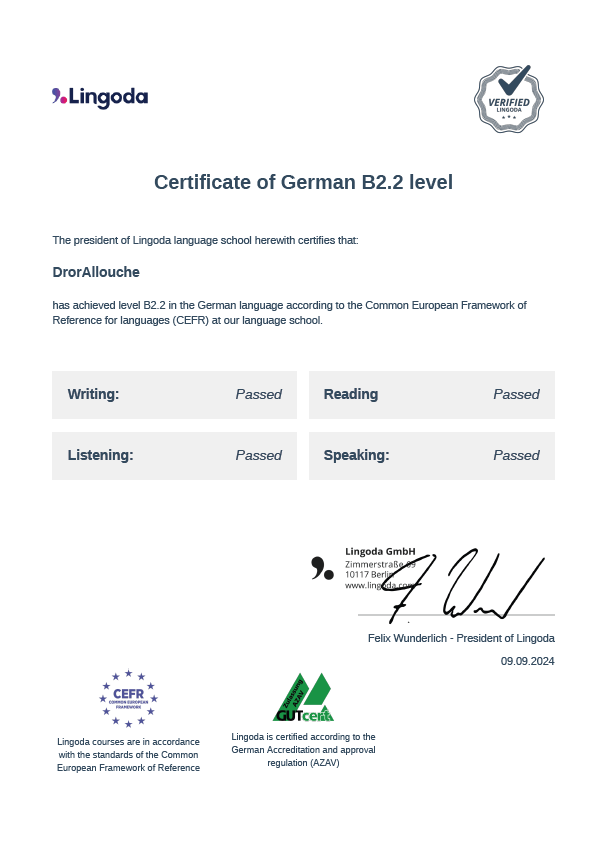
Lingoda example course certification
Cons: Higher Cost, Variable Teaching Styles, Inconsistent Class Availability
Lingoda Cost Significantly More Expensive Than Apps
Let’s be honest about cost. Lingoda classes cost up to $23 each (MSRP), meaning serious learners can easily spend $300-500 monthly. Sprint programs run around $350 to $600 upfront. Compare that to apps like Babbel, Pimsleur, or Rosetta Stone ($8-20/month), and the price difference is substantial.
Class Availability Varies by Level
Higher levels like C1 often had just me and the teacher. This worked in my favor for personalized attention but could be frustrating if you prefer group interaction. Lower levels, on the other hand, fill up quickly and require booking a couple weeks in advance. Even booking ahead, finding classes that follow the curriculum order is sometimes difficult. I usually took whatever was available rather than progressing systematically through topics, which didn’t make for a smooth curriculum.
Not Every Teacher Clicks With Every Student
While all instructors are certified, teaching styles vary considerably. I had one German teacher who focused heavily on grammar rules, which worked for me. But a classmate preferred more conversational practice and found those sessions frustrating.
You can’t request specific teachers, and instructor changes during my progression created some lack of continuity. Teacher quality was solid overall, but personality fit matters in language learning.
Automatic Subscription Enrollment
After Sprint ends, you’re automatically enrolled in a monthly plan. You must manually cancel if you don’t want to continue. This is clearly stated in rules, but easy to overlook. Just be sure to read the fine print.
Sprint Pricing Varies by Language
This feels arbitrary and frustrating. Why should German cost more than Lingoda Spanish? The time commitment and class design are identical. In my mind, Lingoda’s explanation about “language complexity” doesn’t justify the significant price differences for consumers.
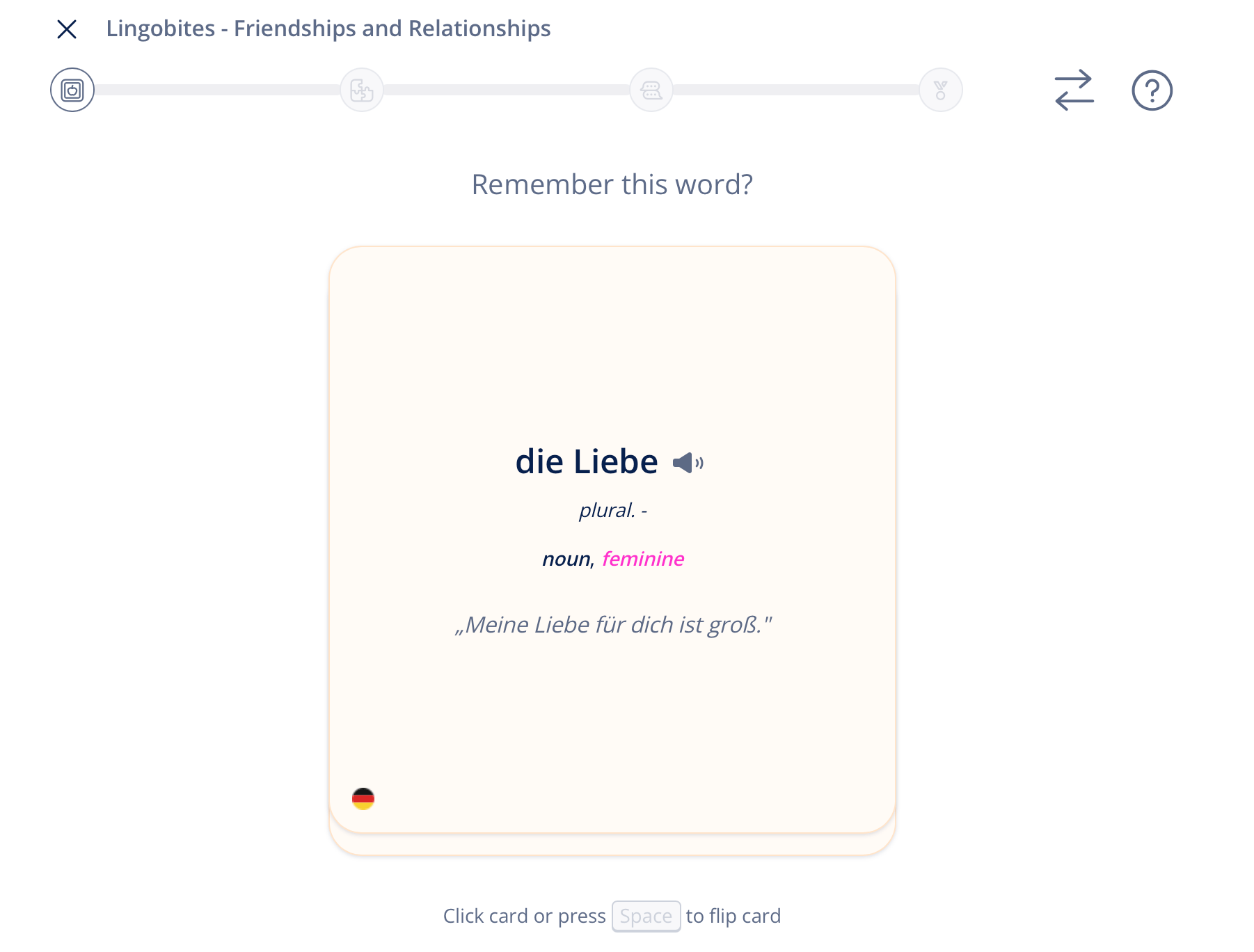
Beyond live classes, Lingoda provides downloadable materials, post-class quizzes, and flashcards. German A1 and English students get additional exercises. All materials are available for download and use anytime, helping you study outside class hours. Their “Lingobite” feature offers 10-20 minute post-class review modules to reinforce learning, or you can take advantage of the AI tool, Lingobot, for personalized additional practice anytime.
Also, in 2025, they released their mobile app called Beta – you can’t take live classes on it, but you can schedule classes, do drills and track your progress.
Lingoda “Lingobite” review module
How Much Does Lingoda Cost?
Lingoda pricing operates on two models: flexible monthly plans and Sprint commitments.
Regular Monthly Plans
The MSRP prices for ongoing group classes (without Sprint commitments) is around $12 to $23 per class – the prices vary depending on which language you choose. Here is a breakdown for German group classes:
5 classes: $100 ($20 per class)
12 classes: $200 ($16.50 per class)
20 classes: $300 ($15 per class)
40 classes: $540 ($13.50 per class)
The cost decreases significantly with higher commitments, so you can save a few bucks if you want to buy more classes. If you prefer private 1 on 1 classes, expect to pay around double (about $25 to $48 per class). Lingoda offers a 7-day free trial on their monthly plan, which gives you access to 3 group classes or 1 private class.
Lingoda Sprint Pricing
Sprint costs vary:
Sprint (30 total classes): $350 – $540 depending on language
Super Sprint (60 total classes): $1,000 – $1,140 depending on language
German and Business English command premium pricing, while Spanish costs less. English falls somewhere in the middle. Lingoda only refunds Sprint if you cancel within 14 days of signing up. If you take a course during those 14 days, then your refund is partial. Miss that window and you’re locked into the full cost, whether you complete the program or not.
Remember, Sprint refunds are substantial if you complete everything: 50% back for both Sprint and Super Sprint. My German Super Sprint was essentially half-price after successful completion!
Value Comparison
Compared to private tutoring ($50 to 150/hour), Lingoda classes offer professional instruction at lower per-hour costs. The other self guided apps cost less, but most don’t provide live interaction or certificates.
The key question: what’s professional language certification worth to your career or goals?
Personal dashboard on Lingoda
Lingoda vs Competitors
Lingoda vs Preply
Preply operates as a tutor marketplace where you browse individual instructor profiles and book directly. Preply tutors cost as low as $5 to $10 an hour, significantly cheaper than Lingoda’s group rate equivalent. Some are excellent; while others lack structure or teaching experience.
Preply’s advantage is flexibility and cost. Lingoda’s advantage is consistency and progression – every class follows CEFR standards, building systematically toward certification.
Bottom line: Preply for budget-conscious learners wanting tutor flexibility; Lingoda for step-by-step progression and recognized certificates.
Lingoda vs Italki
Italki operates similarly to Preply as a tutor marketplace but with more language options. The platform offers both professional teachers (certified) and community tutors (native speakers without formal training).
I found Italki’s tutor quality inconsistent. Some professional teachers rivaled Lingoda’s instructors; others seemed to wing it. Italki’s strength is variety and customization. Lingoda’s strength remains systematic progression with consistent teacher quality.
Lingoda vs Babbel and Duolingo
Comparing Lingoda to app-based learning is like comparing live theater to Netflix – different mediums serving different needs. Duolingo, while popular, gamifies the educational experience in their app, and just doesn’t feel like a serious language learning experience.
Most apps like Babbel, Rosetta Stone, or Pimsleur are solid if you just want something quick, low-cost and self-guided. Trust me, they are great to take you up to the intermediate level as long as you are self-motivated. They’re fine for dipping a toe into a new language. But what if you want the confidence to speak with real people, in situations where certification is required?
That’s where Lingoda feels different; live classes, real teachers and proper certificates that show your progress and give you something solid to build on.
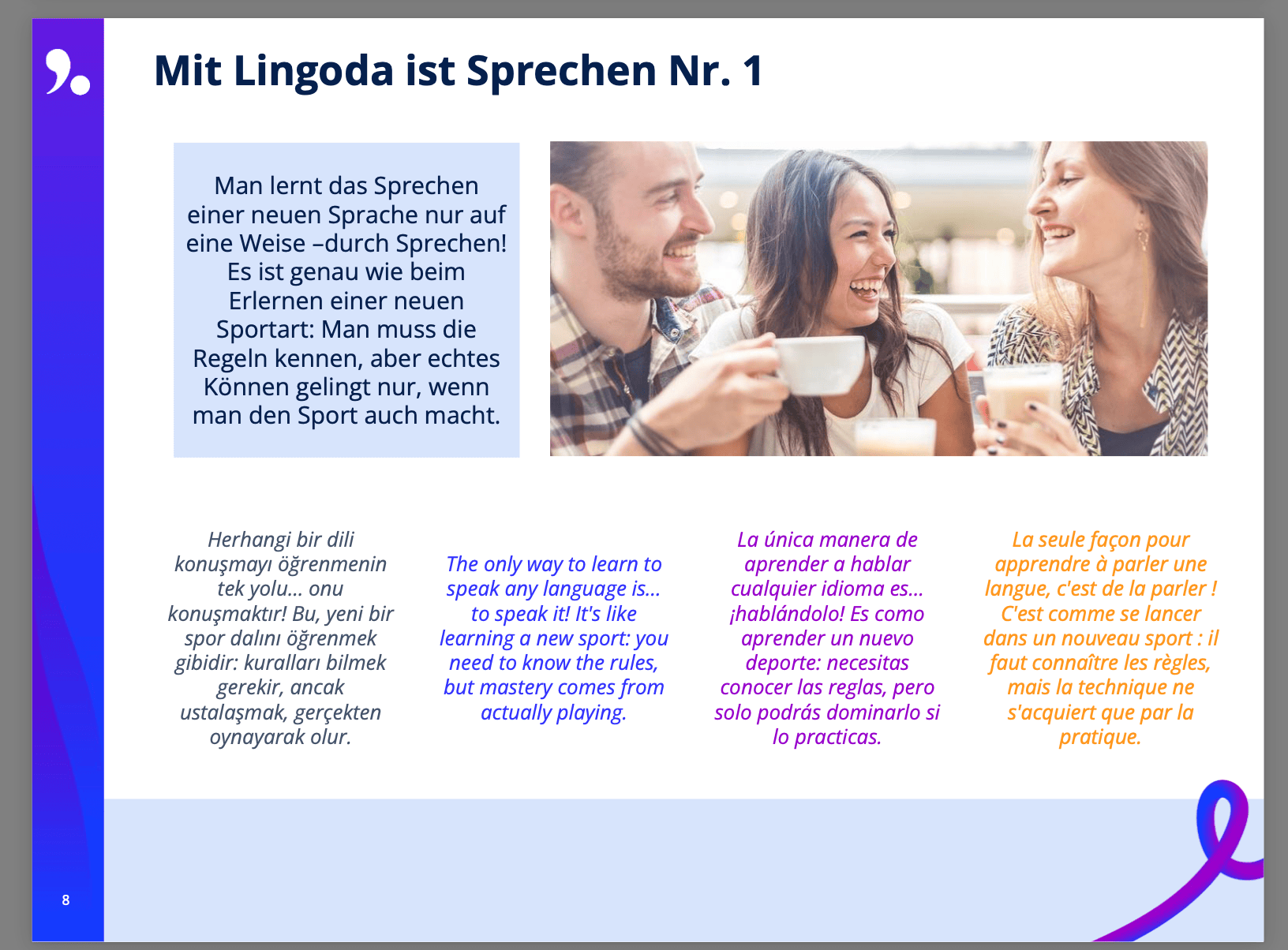
Lingoda group class lesson
➡ Want to review the Best German Language Learning Apps – Click Here
Who Should Use Lingoda?
After three months of Lingoda classes, I’ve identified who benefits most:
Career Professionals
If language skills impact your career progression, Lingoda’s certificates carry weight. During my German classes, I met other professionals with various goals – some preparing for transfers to German offices, others needing German for client meetings, and a few working on technical proficiency for engineering roles.
The structured progression and professional certificates matter for visa applications, job requirements, and internal promotions. HR departments recognize a certification in ways they don’t acknowledge app completion badges.
Exam Preparation Students
Students preparing for official language certification exams (like Goethe for German) benefit enormously from Lingoda’s CEFR-aligned curriculum. The systematic progression directly prepares you for certification exam requirements.
My German classes included specific exam practice sessions, with teachers explaining testing formats and common question types. That targeted preparation isn’t available through general language apps.
Fast-Track Learners
The Lingoda Sprint Challenge attracts motivated learners needing rapid progress. During my Sprint German classes, I met other professionals needing language skills for career advancement – client meetings, international transfers, and technical communication.
If you need conversational proficiency in 2-3 months rather than 1 year, Sprint’s daily intensity delivers results apps can’t match.
Migrants and Expatriates
People relocating internationally often need speaking skills for daily life and professional integration. Lingoda’s practical conversation focus and cultural context help beyond basic vocabulary building.
Classes include real-world scenarios: job interviews, apartment hunting, medical appointments, social interactions. That practical focus helps new residents integrate successfully.
Lingoda supplementary learning resources and exercises
What Users Say About Lingoda
We evaluated reviews on Reddit and Trustpilot to determine how it aligns with ours. With over 300,000 users and a 4.2 out of 5 star rating on Trustpilot, Lingoda has built solid credibility in the live language learning space. The platform claims that 90% of students speak confidently after taking their classes (this is based on their own survey data).
User reviews generally praise the teacher quality and small class sizes – one person said “Classes are well structured, and help me learn. Small size gives everyone a chance to talk, much more so than in a traditional classroom setting.” Common complaints focus on booking difficulties at popular times and the strict Sprint rules. Another user said “Limited Sprint time slots unless you book far in advance, which doesn’t suit everyone’s schedule.” The accountability factor of the Sprint program gets mixed reactions – some love the motivation, others find the pressure stressful.
Final Verdict – Is Lingoda Worth It?
After completing the German Super Sprint and continuing with regular classes, Lingoda is absolutely worth it for serious learners.
The live instruction quality beats anything available through apps or casual online tutoring. Having certified teachers correct your pronunciation in real-time, explain grammar clearly, and provide structured progression toward certification justifies the higher cost. I found the Lingoda Sprint Challenge as their standout feature. The accountability and daily routine create momentum that’s hard to replicate independently. The small group dynamic allows you to practice with peers at similar levels, learn from their mistakes, and build confidence through regular speaking practice.
However, Lingoda isn’t perfect. The variable pricing by language feels arbitrary. Some teachers fit learning styles better than others, and you can’t choose specific instructors. Also the cost remains significantly higher than app-based alternatives.
But professional language instruction costs money. Compared to private tutoring or traditional classroom education, Lingoda classes provide solid value for certified, structured language education.
Bottom line: If you need language skills for career advancement, exam preparation, or international relocation, Lingoda delivers results. For casual, self guided learners exploring a new language, stick with apps. For serious learners needing real results, Lingoda is worth the investment.
Want to try out Lingoda for yourself? Get started with Lingoda
FAQ
Is Lingoda legitimate?
Yes, Lingoda is completely legitimate. They were founded in 2012, based in Berlin, Germany and offer accredited language courses that follow CEFR standards. Their certificates are recognized by employers and educational institutions worldwide.
How does the Lingoda Sprint work?
The Lingoda Sprint is a 2-month challenge where you commit to taking 30 or 60 classes over two months. Attend every class and meet requirements, and Lingoda refunds 50% of your tuition. It requires serious dedication but delivers rapid progress.
Can you get certified with Lingoda?
Yes – Lingoda provides CEFR certificates upon completing each level (A1 through C2). These certificates are internationally recognized and accepted by employers, universities, and visa applications across Europe and beyond.
Is Lingoda better than Preply?
Depends on your goals. Lingoda offers a well-planned curriculum and consistent quality with certified teachers, making it better for systematic progression and certification. Preply provides more flexibility and often lower costs but with variable teacher quality. Choose Lingoda for structure, Preply for customization.
Do Lingoda classes really run 24/7?
Yes, thanks to teachers based worldwide. I regularly found classes available at 6 AM, 11 PM, and weekend slots. The global instructor network makes fitting classes into any schedule genuinely possible.