Test Prep Insight is reader-supported. When you buy through links on our site, we may earn an affiliate commission. Learn more
All About Learning Press Review
Honest All About Learning and Reading review for parents - what it teaches and how it works
Choosing a homeschool curriculum can be overwhelming. Lessons shouldn’t just match your child’s learning style; they should also make your life easier! Although the All About Reading and All About Spelling programs were originally designed for dyslexic learners, they’re marketed for all kinds of readers. As a parent and teacher, I tested out their curriculum over a few weeks to see how it works and whether it keeps kids engaged. Check out this comprehensive All About Learning review to learn about pricing, pros and cons, child safety, and how it compares to competitors. Finally, I’ll give my final verdict on whether All About Learning is one of the best homeschool reading curriculums.
As this is a detailed review that covers a number of topics, you will find a helpful jump-to table of contents above for your convenience.
Video Review: Is All About Learning Worth It?
In the video above, Lara from the Test Prep Insight team gives our full All About Learning review. She covers how the All About Reading and Spelling programs work, lesson structure, pricing, who it’s best for, and key pros and cons so you can decide if All About Learning is worth it for your family. For more detail, be sure to continue reading our full written review below.
Who Is All About Learning For?
We recommend All About Reading and All About Spelling as a parent-friendly comprehensive reading curriculum perfect for homeschool families wanting multisensory instruction.
The All About Learning programs are best for struggling readers, kids needing dyslexia support, hands-on learners, and homeschool parents wanting a structured approach to phonics, fluency, comprehension, and spelling.
We like the mastery-based curriculum that meets kids where they’re at, plenty of hands-on activities for kinesthetic learners, and plenty of parent support that makes teaching a breeze.
Weaknesses of the programs include a higher cost and lots of parental involvement required.
Progress is gradual, but families who stick with 20 minutes per day report great long-term results.
Parents Enjoy Learning Together With Their Kids
How The Programs Work
All About Learning is a multisensory curriculum for reading and spelling designed specifically for homeschool parents who want detailed lessons and sequential instruction. All About Reading (AAR) and All About Spelling (AAS) are primarily physical, hands-on programs where parents directly teach concepts in 15-20 minute daily lessons. Instead of being tied to a specific age range or grade level, both programs are designed to work for any student who needs reading or spelling support, from pre-readers as young as 4 all the way up to struggling teens.
As both a former classroom teacher and a homeschool parent, I’ve always been curious about how AAR and AAS stack up against other phonics programs. After hearing countless positive reviews from the homeschool community, I decided it was time to try these programs for myself. I ordered the full Level 1 kits for both AAR and AAS to test them from the ground up and see if they’re truly effective for homeschool families, struggling readers, and kids with dyslexia.
All About Reading teacher’s manual
While activities differ between the two programs, AAR and AAS use a similar lesson structure where parents talk learners through new concepts before guiding them through a few games and practice exercises. AAR includes tons of reading practice, with parents and kids taking turns to read out loud from the provided readers, while AAS constantly prompts kids to write out new spelling words through fun activities and even original story writing.
The activities tend to be kid-friendly, especially at the lower levels, with colorful letter tiles, games, and hands-on practice. But they also include modifications for older students to keep lessons age-appropriate and avoid anything that feels babyish.
As a busy parent, I appreciated that both programs are completely scripted and open-and-go. You don’t need to figure out how to explain a concept or wonder what to say next; the teacher’s manual walks you through every lesson, step by step. The scripts feel natural and conversational, not robotic, which is a big confidence booster if this is your first time teaching phonics or if you’re worried about doing it ‘right.’
All About Learning also offers the All About Math program (currently Levels 1-2), though we’re focusing this review on their reading and spelling programs.
What’s Included
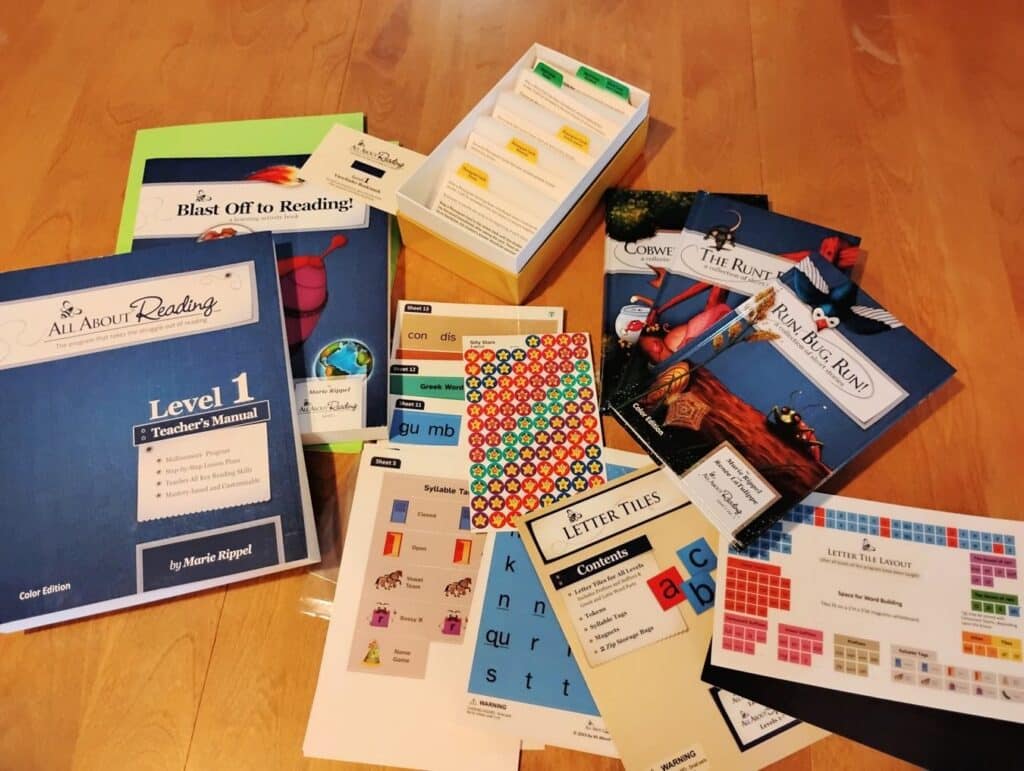
Once the materials arrived, I was immediately impressed by the quality and thoughtfulness of the packaging. Each kit included a comprehensive teacher’s manual, student activity book, letter tiles for hands-on practice, readers (for AAR) or spelling practice sheets (for AAS), and flashcards. I organized everything using the included Review Box for flashcards and set up a dedicated bin for the letter tiles to keep things tidy.
The first thing I did was open the AAR teacher’s manual, where a detailed chapter called ‘Preparing for Level 1′ walked me through the entire program philosophy and structure. This introductory section answered all my questions about how to use the materials and made me feel completely ready to start teaching, even though I’d never used this specific curriculum before.
Both AAR and AAS allow you to purchase materials separately or as complete bundles. I strongly recommend buying the full package upfront, as it includes everything you need and saves you from having to order missing pieces later. Here’s a breakdown of what you get:
Teacher’s manual: The comprehensive teacher’s manual is the heart of the program. It guides parents through each lesson with complete scripts, materials lists, and teaching tips so you always know exactly what to say and do. There are separate teacher’s manuals for AAR and AAS, since the programs teach different skills.
Student Packet: The student packet includes everything kids interact with during lessons: activity books for writing practice, flashcards for review, progress charts to track milestones, and motivational stickers to celebrate achievements. Again, AAR and AAS have separate student packets tailored to reading versus spelling instruction.
Readers (AAR only): The hardcover readers feature quirky, engaging stories with illustrations that genuinely made me smile, like ferrets drumming on jam jars. These books only use phonics concepts kids have already mastered, which builds confidence. They’re funny without being annoying or over-the-top, which is a tough balance to strike.
Letter Tiles: The magnetic letter tiles are fantastic for hands-on practice. Kids physically build words on a whiteboard or even on the fridge, and that tactile process of creation and discovery is tremendously helpful for internalizing phonics rules. This is one of the multisensory elements that makes the program stand out.
All About Reading – Letter Tiles
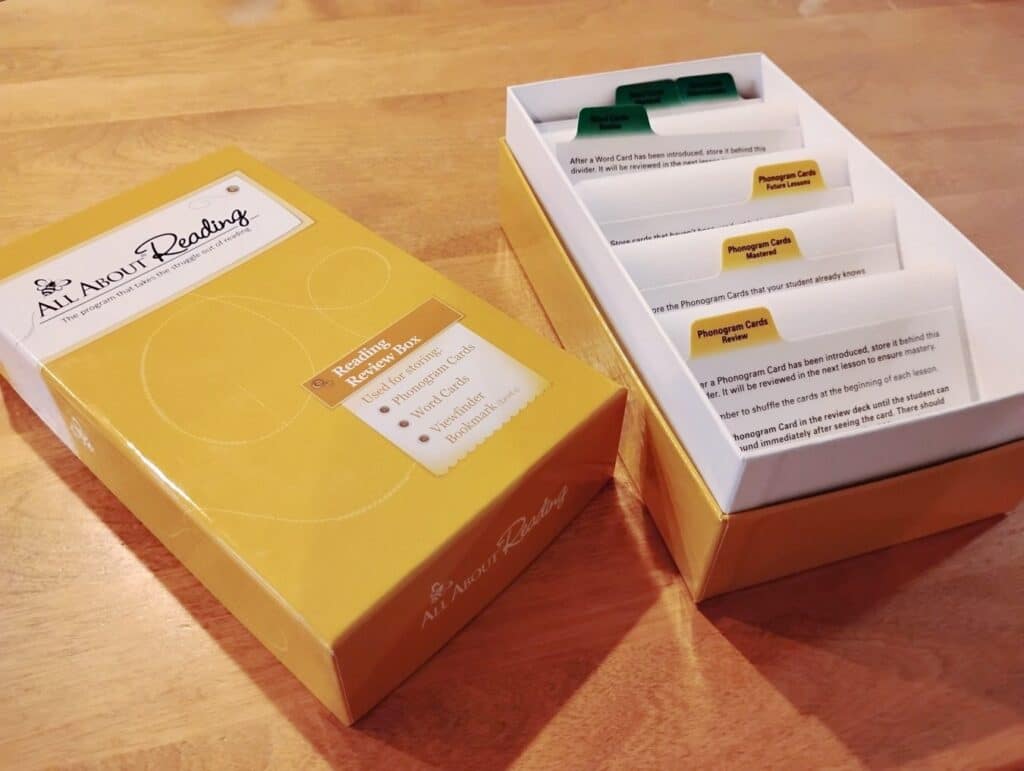
Review Box: The sturdy review box keeps flashcards organized by category, making daily review sessions quick and painless. This was a lifesaver for me – no more hunting for lost cards or shuffling through messy stacks.
Digital Support: The program includes three companion apps, but these are minimal supplements rather than core learning tools. The pronunciation apps shows proper mouth positioning for tricky sounds, and there’s a letter tiles app for on-the-go practice. However, I found the physical tiles far more effective for actual learning – the apps work best as occasional reference tools. All apps are completely safe for kids, as they’re 100% closed environments with no ads, chat features, or data collection.
Parents typically start by taking the free online placement test to find the right level for their child. Unlike traditional curricula tied to specific grades, AAR focuses on competency where kids progress when they’re ready, not based on age or grade.
The Pre-Reading program introduces preschoolers to sounds and letters through hands-on games and crafts, like taping twigs together to form the letter X. Level 1 then takes kids from sounding out three-letter words to reading complete sentences, while Level 2 introduces more complex phonics patterns. By Level 3, kids are tackling multi-syllable words, and Level 4 focuses on building fluency and comprehension.
All About Reading: levels and skills overview
Program level
Approximate grade level
Primary skills
Activity types
All About Reading pre-reading
Preschool to kindergarten
Identifying sounds, matching letters with sounds, developing interest in reading
Hands-on letter building, letter coloring sheets, letter hunts, mealtime alphabet games
All About Reading level 1
Kindergarten to grade 1
Sounding out simple words, consonant teams, reading short phrases and sentences
Matching games, letter tiles, word flipping activities, animal games
All About Reading level 2
Grades 1-2
Further phonics rules, common vowel and consonant combinations
Arranging sentences in order, word sorting, problem solving activities
All About Reading level 3
Grades 1-2
16 new phonograms, reading multi-syllable words
Reading with funny voices, character based games, letter tiles, word changes
All About Reading level 4
Grades 2-3
Advanced phonograms like PH and OUGH, increased reading fluency and comprehension
Word building, cooking simulations, Greek mythology games
All About Spelling: Levels and Placement
All About Spelling’s seven levels progress from basic spelling rules (Levels 1-2) through complex patterns and suffixes (Levels 3-4). After that, students tackle advanced concepts like the i-before-e rule in Levels 5-6 and finally Latin roots and Greek elements in Level 7.
Free placement tests on their website help you start at the right level and children progress at their own pace, without unhelpful grade-level comparisons.
All About Spelling: levels and placement
Program level
Approximate grade level
Primary skills
Activity types
All About Spelling levels 1-2
Grades 1-2
Foundational spelling rules, short vowel sounds, initial blends, Silent E
Sound games, filling out word cards, spelling with letter tiles, animal games
All About Spelling levels 3-4
Grades 2-4
Complex spelling rules, prefixes, suffixes, advanced vowel combinations, common contractions
Cut-out card activities, dictation notebook, word banks, sentence copying, word sorts
Writing original sentences using new words, forming various word endings, copying sentences
All About Spelling level 7
High school
Latin and Greek roots, adding suffixes to Silent E, loan words from French, Spanish, and Italian
Writing original paragraphs using new words, building words from Greek parts, copying sentences
Is AAR Good for Dyslexia?
All About Reading is a highly effective way to teach struggling readers and students with dyslexia. The program was specifically designed by Marie Rippel, a mom whose severely dyslexic son was told by experts he would never learn to read or spell. Today, both AAR and AAS are based on the research-backed Orton-Gillingham approach – the gold standard recommended by the International Dyslexia Association. This means lessons follow a structured, step-by-step progression, with direct teaching of letters, phonics, and spelling rules to minimize confusion.
Kids with dyslexia (and many struggling readers) need way more practice than their peers, but here’s the thing: AAR bakes that review right into every lesson without it feeling like you’re just drilling the same stuff over and over. The curriculum is also built with zero gaps: kids don’t move forward until they’ve really got the concept down. From my classroom teaching days, I can’t tell you how many times I watched struggling readers hit a wall because they’d missed something foundational a few lessons back. Those gaps are brutal, and AAR simply doesn’t let that happen.
As I went through the curriculum, I was struck by how every page is designed with struggling learners in mind. This isn’t a program where dyslexia support feels tacked on. The materials work for all ages, which matters when you have an older reader who needs help but refuses anything that looks babyish.
Best of all, just about everything is multisensory. Kids read, listen, and use their hands to move letter tiles, play games, and trace letters. It’s this hands-on element that makes reading click, whether your child has dyslexia or just learns better by doing.
You don’t need special training to teach it. The scripted lessons walk you through everything, which honestly surprised me considering this approach is taught in graduate-level courses. A single lesson might take two days or two weeks depending on your child. There’s no pressure to keep pace with grade levels; your kid moves forward when they’re ready.
👉 Check out our review on ABCmouse, a learning app for toddlers and kids
A Typical Lesson
All About Learning Reading Materials
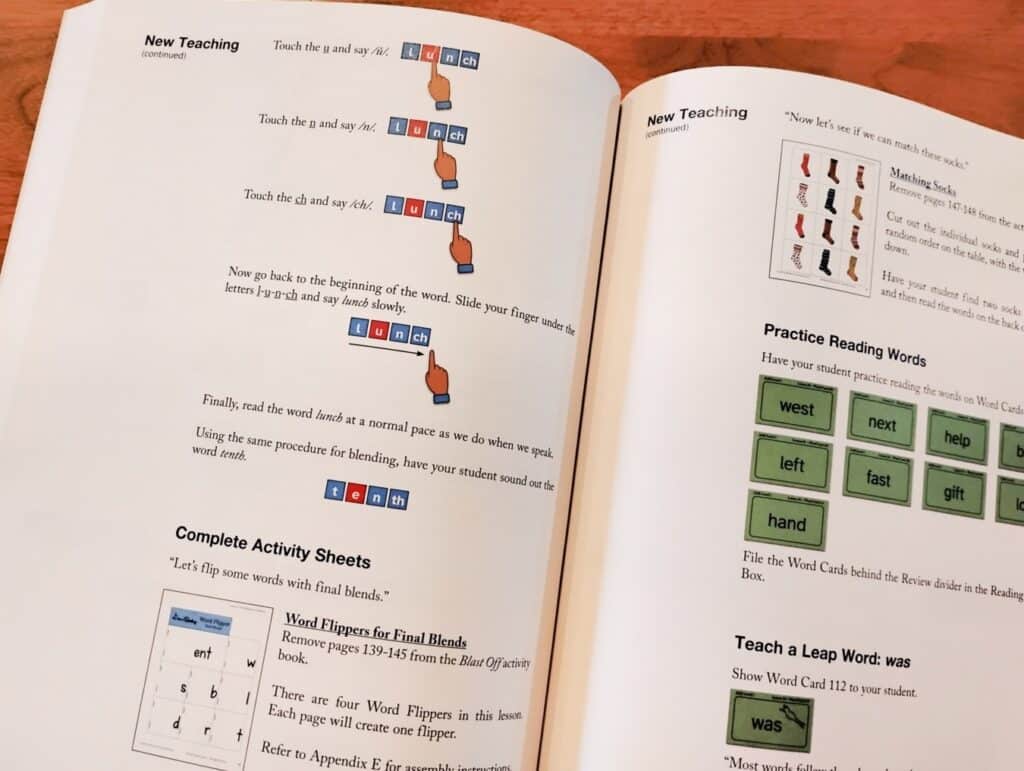
AAR lessons take about 15-20 minutes. After reviewing previously learned word cards, you move into the new concept. The teacher’s manual walks you through every step of introducing new vocab and explaining the learning exercises. I liked that the activity book includes removable pages, like cutting out pictures and rhyme cards for a matching game. Once learners finish the activities and reading assignment, they mark a progress chart for a quick confidence boost.
There’s no pressure to complete a full lesson per day. Since the program is all about going at your child’s pace, the materials encourage you to take as much time as your student needs to feel confident before moving on.
AAR and AAS are not cheap upfront, but many materials are reusable across levels, which brings down the per-child cost significantly.
All About Reading Pricing
Getting started with AAR Level 1 requires three purchases totaling about $204:
Reading Review Box ($20)
Letter Tiles set ($24)
AAR Level 1 Materials ($160) – includes teacher’s manual, activity book, decodable stories, flashcards, stickers, and three readers
What subsequent AAR levels cost
Here’s the good news: you reuse the Review Box and Letter Tiles for every level. So Level 2 through Level 4 only cost about $160 each (just the materials, no new box or tiles needed). If you choose to start with the Pre-Reading program for children still learning their letters, that costs $120.
All About Spelling Pricing
AAS Level 1 requires about $109 total:
Spelling Review Box ($18)
Letter Tiles set ($24, unless you already have them from AAR)
AAS Level 1 Materials ($67) – includes teacher’s manual, activity book, flashcards, and stickers
What subsequent AAS levels cost
Like AAR, you reuse the Review Box and tiles. AAS Levels 2-7 range from about $50 to $70 each (materials only).
Here’s where the investment really pays off. For additional children, you don’t need to buy the full Materials package again. Instead, you can reuse the teacher’s manual and only purchase the more limited Student Packets, which include just the consumables (activity books, flashcards, and stickers). AAR Student Packets cost $37 to $68 per level, while AAS Student Packets run $28 to $50 per level. Everything else (teacher’s manuals, readers, review boxes, and letter tiles) can be reused.
You can sample teacher’s manuals and example lessons online before purchasing. The return policy is unbeatable: full refund within 12 months, no questions asked.
Bottom line: AAR and AAS require an upfront investment, but the cost per child drops dramatically for families with multiple kids. Plus, the 12-month guarantee removes all purchase risk.
Pros And Cons
All About Learning readers
AAR and AAS have a lot going for them. Here are some of my favorite highlights:
Highly effective for dyslexia and struggling readers. This isn’t just another phonics program – it’s built on the proven Orton-Gillingham approach with structured, multisensory lessons. It works exceptionally well for kids with dyslexia, but it’s also incredibly effective for any child who needs reading support.
The structured literacy program ensures nothing gets skipped. From both my teaching experience and research into reading instruction, I’ve seen too many struggling readers hit walls because they missed foundational concepts – AAR doesn’t let that happen.
The mastery-based curriculum ensures learning while boosting confidence. Instead of moving kids forward based on age or grade level, the program focuses on actual competency. Kids progress when they’re ready, not when they hit a birthday.
Quick 15-20 minute lessons with detailed scripts make teaching easy. I was impressed by how foolproof these lessons are – anyone can do this. Each lesson walks you through exactly what to say and do, no prep time needed. You can confidently lead lessons instead of wondering if you’re doing it right.
Hands-on learning keeps lessons engaging. The letter tiles and activity book give kids constant hands-on practice, which is both great for kinesthetic learners and for reducing boredom. Parents don’t have to assemble elaborate crafts, either – most activities only require you to cut out a few quick cards.
Of course, the program isn’t perfect. Here are a few areas I’d like to see improve:
The physical kits have a higher upfront price than subscription models. Spending upwards of $200 at once can be intimidating. In comparison, apps-based reading programs, like Hooked on Phonics and Reading Eggs, range from about $7 to $13 per month.
Parents need to invest time every day in direct instruction. I’ve been a working parent, and I know that sometimes, just getting dinner on the table is an accomplishment. If you’re looking for a self-directed program with minimal parental involvement, AAR probably isn’t a good fit.
Advanced readers might get frustrated with the slower pace. Kids who catch onto phonics quickly still have to complete every single activity, which can feel like busywork for naturally strong readers.
The digital apps are very limited. Both of the included apps are more like supplemental reference guides than extended learning resources. Even the letter tile app, which costs extra, doesn’t have a learning path, songs, avatars, or games.
👉 See our review on a leading phonics app, Reading Eggs
Who It’s Best For
AAR and AAS programs are ideal for:
Struggling readers and spellers: The systematic, step-by-step approach with plenty of review is effective for kids who haven’t clicked with other reading methods. In my classroom experience, I’ve found that multisensory techniques are especially helpful for students who are resistant to traditional workbooks.
Kids with dyslexia or learning differences: Color-coded tiles, clear phonics instruction, and a focus on building competency give learners the tools and time they need to succeed at their own pace.
New homeschool parents or those without teaching experience: If the thought of teaching reading makes you nervous, the fully scripted lessons are a game-changer. The manual tells you exactly what to say and do, with teaching tips right when you need them.
Hands-on, kinesthetic learners: Students who learn best by moving and touching will thrive with the letter tiles, games, and interactive activities.
Families wanting a proven curriculum they can use for multiple children: The materials are durable and reusable (you only need to buy new student packets for each child), and the programs work for any age from preschoolers to high schoolers who need reading support.
All About Reading review box
Who should consider alternatives:
Independent learners wanting app-only instruction: These programs require consistent adult instruction for teaching new concepts. If you’re looking for a program your child can complete on their own while you’re making dinner, this isn’t it.
Families seeking all-digital solutions: This is essentially a physical curriculum with books, flashcards, and letter tiles. If you need everything stored digitally, it won’t work for you.
Kids who are already reading fluently and just need enrichment: AAR isn’t designed for children who are already reading chapter books independently. That being said, even strong readers can get a lot of benefit out of AAS, which includes more advanced material.
Alternatives To All About Learning
All About Learning vs Hooked on Phonics: Since it’s more app based, Hooked on Phonics is great for kids who work semi-independently and love digital rewards. Hooked on Phonics is also more affordable. All About Learning involves parents more, but its scripted lessons, hands-on letter tiles, and explicit, competency-focused instruction make it a strong choice for struggling readers.
All About Learning vs ABCmouse: These aren’t really competitors. ABCmouse is a broad early learning platform covering multiple subjects with independent activities, while All About Learning is a dedicated, parent-led phonics program. Use them together: ABCmouse for general enrichment, All About Learning for focused reading instruction.
All About Learning vs Reading Eggs: In addition to being more affordable ($70-100/year), Reading Eggs offers the benefit of self-directed, digital lessons covering phonics, vocabulary, and comprehension. All About Learning costs more but provides hands-on instruction with letter tiles, letting you catch mistakes in real time. This makes it better for struggling readers needing intensive, customizable support.
Other Competitors: Other programs worth considering include Logic of English (more academic, Orton-Gillingham approach) and Nessy (dyslexia-specific with digital games), though neither offers All About Learning’s combination of hands-on instruction and scripted parent support.
Is All About Learning Press worth the investment? For most homeschool families, yes, absolutely.
For families with children ages 4 through high school looking for proven reading and spelling instruction, All About Reading and Spelling are hard to beat. These programs are exceptionally effective for kids with dyslexia and struggling readers, though any child needing reading support will benefit, and AAS is great even for advanced readers.
What makes them work? Kids engage hands-on by moving letter tiles, playing games, and reading stories. The lessons build step-by-step, and kids don’t move forward until they really get it. Plus, the line-by-line scripts make teaching effortless with no prep required. The materials are reusable for siblings, and there’s a 12-month money-back guarantee.
There is room for improvement: the upfront cost can be intimidating, and these programs require daily parent involvement. You can’t hand your kid a tablet and walk away. The digital apps are also limited, serving more as reference tools than interactive learning platforms.
But the bottom line: All About Reading and All About Spelling deliver solid, research-backed literacy instruction that actually works for struggling learners, making them well worth the investment for homeschool families serious about reading and spelling.
Absolutely. The Pre-Reading program and Level 1 are specifically designed for kids who are just starting their reading journey, with no prior knowledge required.
My child is dyslexic. Will All About Reading help?
Yes, AAR was designed using the Orton-Gillingham approach that’s proven effective for dyslexic learners, with multisensory techniques and mastery-based pacing that give kids the time and tools they need to succeed.
Which level should we start with?
Take the free placement test on the All About Learning Press website to find out exactly where your child should start based on their current skills, not their age or grade level.
How long is a typical lesson, and how many should students complete per week?
Lessons typically take 15-20 minutes. Most families do 3-4 lessons per week, though the program is flexible enough to go faster or slower based on your child’s needs.
Can I reuse the kit with siblings?
Absolutely! You only need to purchase new student packets (activity books and consumable materials) for each child, but the teacher’s manuals, readers, letter tiles, and review box can be reused for all your kids.
Do I need the letter tiles app and the physical tiles?
The physical letter tiles are essential, while the Letter Tiles app is optional and mainly useful for practicing on the go.
What’s the difference between Pre-Reading and Level 1?
Pre-Reading builds foundational skills (letter recognition, sounds) through games and reading aloud. Level 1 is where kids start actually reading words and sentences. Pre-Reading is the warm-up; Level 1 is the main event.